
Über die Konferenz
Die Munich Embedded 2026 (ME26) bringt führende Experten und Entwickler aus der Embedded-Branche zusammen, um die drängendsten Herausforderungen der Branche zu diskutieren:
- Wie können wir die Qualität und Sicherheit von Embedded-Systemen gewährleisten?
- Welche Tools und Methoden unterstützen uns dabei am besten?
- Wie wird die Embedded-Entwicklung der Zukunft aussehen?
In fokussierten Vorträgen und kurzen Lightning Talks teilen Experten ihre Erfahrungen zu Testing-Strategien, Security-Konzepten und Entwicklungswerkzeugen. Die Munich Embedded schafft dabei den idealen Rahmen für intensiven Austausch: Mit ca. 100 Teilnehmern bleiben die Diskussionen konkret und praxisnah.
Vernetzen Sie sich mit anderen Embedded-Entwicklern aus der Region und gewinnen Sie wertvolle Einblicke für Ihre tägliche Arbeit!
Rahmendaten
- Datum: 27.10.2026, 16 – 21 Uhr
- Location: WERK1, Am Kartoffelgarten 14, 81671 München
- Teilnehmerzahl: max. 100
- Zielgruppe: Embedded Entwickler und Führungskräfte
Fokus
- Sicherheit und Zuverlässigkeit
- Testing-Strategien
- Entwicklungstools und Frameworks
Ablaufplan (vorläufig)
| Uhrzeit | Was |
|---|---|
| 16:00 – 16:30 | Einlass und Getränke |
| 16:30 – 16:45 | Start, Welcome |
| 16:45 – 17:00 | Lightning Talk: Josef Holzmayr – The three deadly pins |
| 17:00 – 17:30 | Technical Talk: Ozan Durgut – Stop Hacking Hardware Test Scripts — Hack on Hardware with Friends |
| 17:30 – 17:45 | Lightning Talk: Thomas Leyrer – HIL Simulation Simplified |
| 17:45 – 18:15 | Pause |
| 18:15 – 18:45 | Technical Talk: Dr. Wolfgang Freese – Co-simulation of µC software and electric circuits for functional safety |
| 18:45 – 19:15 | Technical Talk: Robert Jeutter – Why Medical Devices Are So Hard |
| 19:15 – 21:00 | Networking, Abendessen |
| 21:00 | Ende |
Hinweis: Die Vorträge werden mit Zustimmung der Redner aufgezeichnet und im Anschluss veröffentlicht (nur Folien/Bildschirminhalt und Audio).
Vorträge (auf Englisch)
The three deadly pins
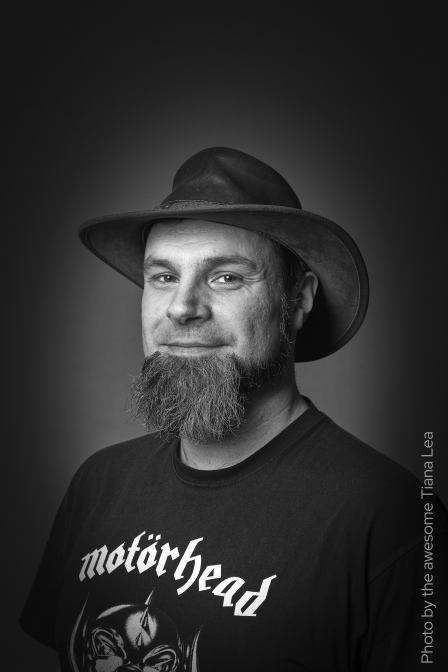
Lightning Talk (10 min)Josef Holzmayr (Northern.tech)
Josef has been active for more than 15 years as a "Complete"-Stack developer for industrial controls by now. He's done everything from debugging hardware to writing drivers, from application development to web front ends.
A passion for showing, telling, and teaching people in both entertaining and engaging ways led Josef to Mender.io. Here, he tries to make the world better and more secure by enabling OTA updates for as many devices as possible.
Abstract
Ground, TX, RX. Three UART pins, a two-dollar serial adapter, and a live U-Boot prompt — and the secure boot chain you spent months designing stops being a chain.
This talk walks through what actually happens at that prompt on a shipped device: rewriting bootargs to land a root shell, sideloading an unsigned kernel, dumping flash, pulling secrets out of RAM. None of it is novel. All of it still works on hardware being manufactured today.
Then the uncomfortable part: the mitigations most teams believe in don't hold up. bootdelay=0 is not a defense. A depopulated header is not a defense. CONFIG_AUTOBOOT_KEYED has footguns. Signing the kernel means little when the environment deciding which kernel to boot sits outside the chain of trust. We'll go through the short list of things that genuinely lock U-Boot down for production, and the longer list of reasons teams skip them anyway.
If you ship connected hardware and you've never attacked one of your own devices with a serial cable, you should. Someone else already has.
Stop Hacking Hardware Test Scripts—Hack on Hardware with Friends
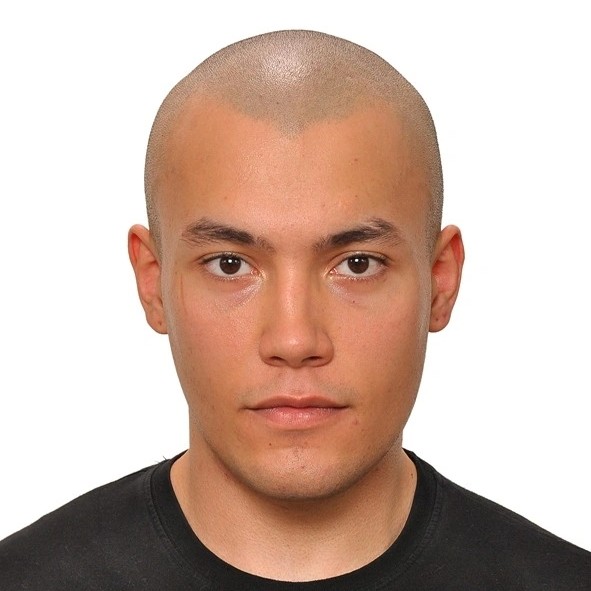
Technical Talk (25 min)Ozan Durgut
Ozan Durgut is an Embedded Linux Engineer at Analog Devices and a master's student at TUM. His work includes open-source contributions to embedded systems and low-level software, particularly in Linux-based platforms. He has authored multiple publications in computer vision and embedded AI, and co-authored books on embedded image processing with microcontrollers. He received the IEEE Young Researchers Best Paper Award in 2024.
Abstract
Test automation in embedded systems is often limited by physical hardware access. Teams build custom setups that work locally but do not scale, leading to fragmented workflows and duplicated effort.
We present a unified approach based on Labgrid, developed for a large-scale board farm at Analog Devices. The system connects hundreds of devices across locations and exposes them through a single interface. Hardware remains local but becomes globally accessible, allowing engineers and automated agents to interact with real targets as if they were on their desk. The key idea is to treat hardware as a shared, schedulable resource, enabling collaborative development, reproducible testing, and CI/CD integration.
Built on and contributing to the open-source Labgrid ecosystem, our approach emphasizes extensibility and collaborative development. We also explore how AI-driven agents can directly access and operate real hardware to debug issues and assist development. We share practical lessons and demonstrate how testing can evolve from isolated setups to scalable, and open infrastructure.
HIL Simulation Simplified: AI-Generated Open Source Tools and Standard Hardware for Faster Real-time Embedded Development
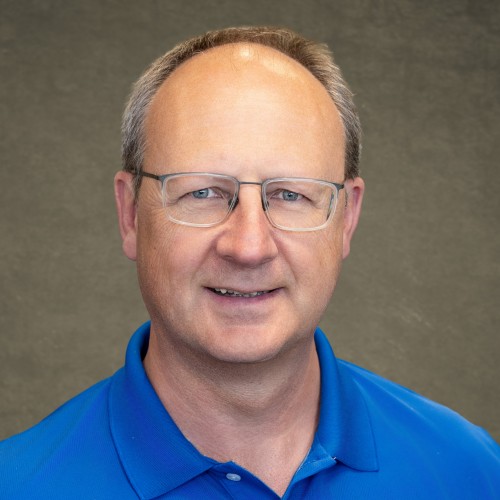
Lightning Talk (10 min)Thomas Leyrer (Texas Instruments)
Thomas Leyrer is System Architect of TI's Industrial Communication and Control solutions. He is responsible to develop solutions for Industrial Automation market including Fieldbus and Industrial Ethernet on TI Microcontroller.
Thomas has more than 30 years experience with TI's Semiconductor Group. He held several engineering and application manager positions for Computer, Automotive, Broadband Communication and Industrial Automation market. He is an advocate of Linux Open Source and system architect for industrial communication and control on ARM SoCs. Thomas holds an Engineering degree in Electrical Engineering from FH Landshut.
Abstract
Hardware-in-the-Loop (HIL) simulation is a proven method for validating embedded electronics in demanding environments — from high-power systems and battery management to robotics and industrial controls. Traditional HIL setups depend on FPGA-based platforms and proprietary toolchains. The associated licensing costs, specialized expertise requirements, and long integration cycles create significant barriers to broader adoption.
This session presents an alternative architecture that achieves real-time embedded testing fidelity using standard microcontrollers, open source firmware, and AI-assisted toolchain generation. Rather than replacing simulation rigor, the approach redefines where complexity lives: AI code generation handles the labor-intensive creation of plant models, hardware abstraction layers, and communication interfaces, while standard microcontroller hardware provides the real-time execution substrate. A live motor control demonstration will showcase the complete workflow — from plant model simulation to real-time embedded testing — illustrating how this approach delivers results comparable to traditional HIL systems at a fraction of the cost and complexity.
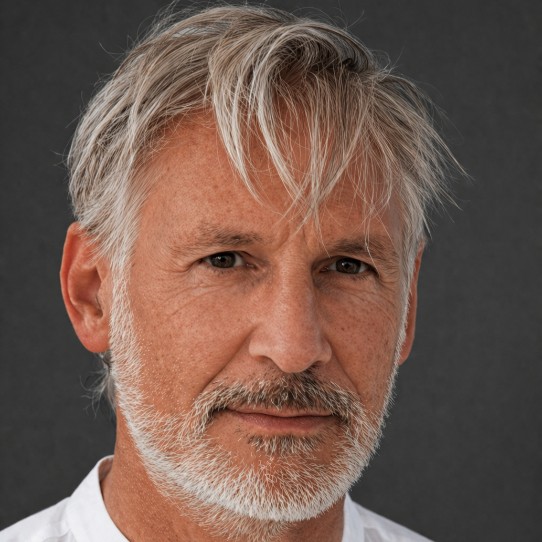
Co-simulation of µC software and electric circuits for seamless automated functional safety workstreams
Technical Talk (25 min)Dr. Wolfgang Freese (Modelwise)
Dr. Wolfgang Freese is a functional safety professional with over 15 years of experience, in roles ranging from Functional Safety Manager and Chief Engineer to Director Functional Safety. He has built and led global teams, trained more than 100 engineers in functional safety, and defined and established optimized processes and methods.
He is the author of technical books and articles, a frequent speaker and panelist at international conferences, and host of the podcast "Applied FuSa". Today he is Head of Product at Modelwise, the company behind Paitron, a solution that automates FMEDA by simulating component faults directly in the circuit.
Hinweis: Dieser Vortrag wurde ursprünglich von Claudius Jordan eingereicht. Wir freuen uns, dass sein Kollege Wolfgang ihn vertritt!
Abstract
Functional safety has traditionally been the domain of electronic hardware engineers. However, as safety-critical systems rely more and more on software, a new challenge emerges: how do we ensure functional safety when the boundary between hardware and software becomes blurred?
This talk presents a practical approach using co-simulation of microcontrollers and analog electrical circuitry to bridge this gap. The presentation covers:
- setting up a co-simulation linking microcontroller code with SPICE-based analog circuit models and
- performing automated Failure Modes, Effects, and Diagnostic Analysis (FMEDA) across the hardware-software boundary
Attendees will leave with actionable insights on implementing co-simulation in their development process, enabling functional safety engineers to address safety concerns holistically rather than treating hardware and software as separate silos. This approach reduces late-stage safety validation failures and accelerates certification processes.
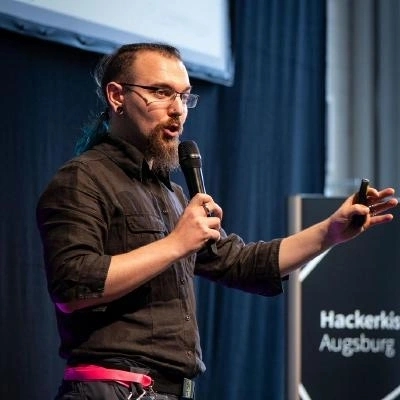
Why Medical Devices Are So Hard: A Developer's Perspective
Technical Talk (25 min)Robert Jeutter (Corpuls)
Embedded developer and software architect working on safety-critical medical technology at Corpuls. Robert builds life-supporting and embedded systems in Rust and C, with a strong focus on reliability, architecture, and maintainability. Previously he worked as an independent software engineer across web and industrial projects. He also speaks at CCC, Hackerkiste and robotics events, and is an iSAQB certified Advanced Software Architect.
Abstract
Medical devices often look slow, over-engineered, and unnecessarily hard to change — especially from the perspective of developers used to fast-moving IT or typical embedded projects.
After moving into medical embedded software, I learned that this complexity is not accidental. It is the result of systems that must remain safe, analyzable, testable, and maintainable over very long life-cycles, while operating under large regulatory and certification constraints that reach deep into the architecture and implementation.
In this talk, I offer a compact developer's perspective on what makes medical devices fundamentally different from other devices. Using concrete examples from everyday engineering work, I show why small design choices can have long-term consequences, why "simple changes" are often not simple at all, and why familiar instincts from other domains sometimes fail in regulated environments.
Sponsoren und Partner
Werden Sie Sponsor!
Als Sponsor der Munich Embedded erreichen Sie gezielt Embedded-Entwickler und Entscheider aus der Region. Wir bieten verschiedene Sponsoring-Pakete an, die auf Ihre Bedürfnisse zugeschnitten sind.
Kontaktieren Sie uns
Rohde & Schwarz
(Gold Sponsor)

Modelwise
(Gold Sponsor)

OnMCU
(Gold Sponsor)

Analog Devices
(Silver Sponsor)

Texas Instruments
(Bronze Sponsor)

Aisler
(Bronze Sponsor)

MicroConsult
(Bronze Sponsor)

edge lab LIVE!
(Bronze Sponsor)

VDE Bayern
(Partner)
Bavarian Chips Alliance
@ Bayern Innovativ GmbH
(Partner)
Veranstalter
Systemscape GmbH, München
#bXVuaWNoLWVtYmVkZGVkQHN5c3RlbXNjYXBlLmRl
www.systemscape.com